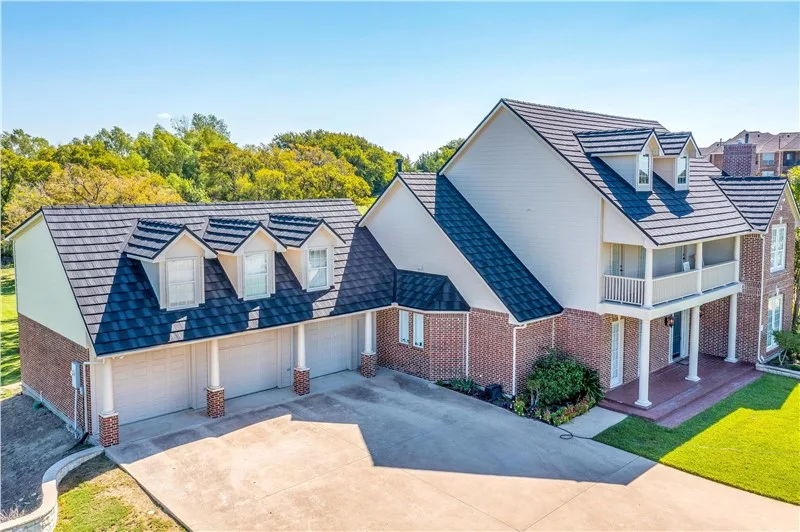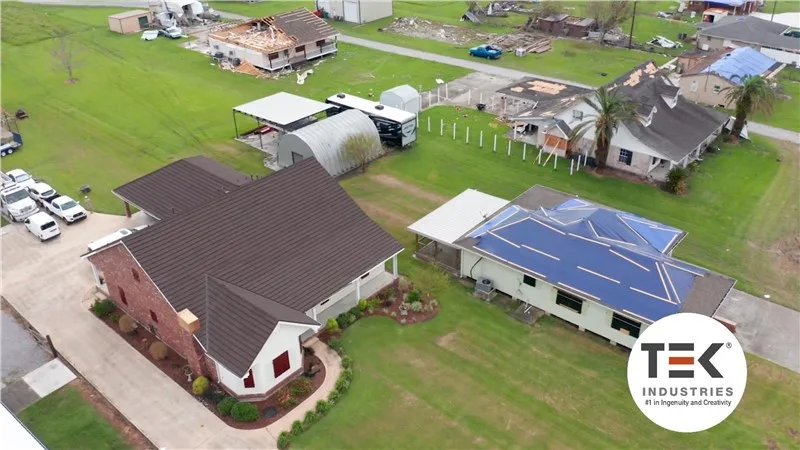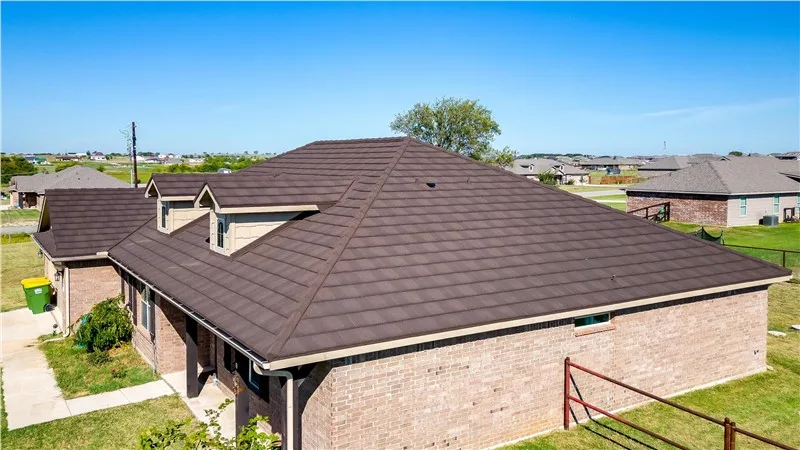
Stone-coated steel roofing is a type of metal roof made with formed steel panels and a textured stone-granule finish. It gives a home the appearance of traditional asphalt shingles, cedar shake, or tile while using steel as the main roofing material. Homeowners choose it for its durability, storm-resistant product options, and long-term value.
At TEK Industries, stone-coated steel is what we manufacture. We engineer panels for different climates and home styles, then work with authorized roofing dealers to get the right system installed. Here is how the material works and what to consider before choosing it for your house.
What is inside a stone-coated steel panel?
The foundation of the panel is steel. It is shaped to form a roofing profile, then protected by a system of coatings and a decorative stone finish. The outer stone granules give the panel its familiar textured appearance and help create the visual depth homeowners expect from shingles, shake, or tile.
With TEK stone-coated steel, we use a 28-gauge steel core. Our product line includes profiles and options with additional features, such as foam components on certain systems. The exact construction depends on the product, so your installer should show you the current specification for the profile you select.
The finished roof is a system of panels, underlayment, flashing, fasteners, and accessories. The way those parts fit together affects its ability to resist wind, shed water, and perform over time.
How is it different from an ordinary metal roof?
When many people picture a metal roof, they imagine long smooth panels with raised seams. That is often a standing seam roof. Stone-coated steel has a different look. The panels are formed into shorter, textured shapes designed to resemble more traditional residential roofing.
That gives homeowners choices. A shake-style roof works well on some rustic or traditional homes. Shingle profiles may fit a neighborhood where asphalt roofing is common. A tile-style profile may suit a coastal or Mediterranean-inspired house.
Both stone-coated steel and standing seam can be durable materials, but their fastening, panel geometry, appearance, and installation requirements are not the same. The best choice is the one designed and installed for your specific building.
How strong is stone-coated steel roofing?
Steel panels provide a durable base material, but no single roof can avoid every form of storm damage. Product-specific testing is what matters. Some TEK systems carry a Class 4 impact rating under UL 2218. That rating is earned through a laboratory test using a 2-inch steel ball dropped 20 feet. It is a meaningful sign of impact resistance, not a guarantee against dents or damage from every hailstorm.
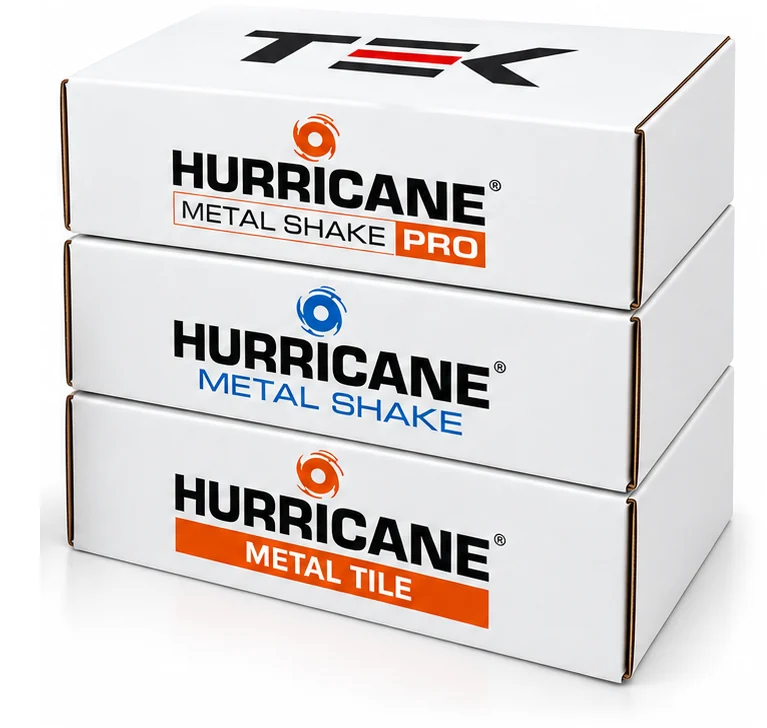
We also manufacture roofing designed for severe-weather regions, including Hurricane® products and coastal applications. Wind performance depends on the tested assembly, how it is installed, and the requirements at the building’s location. Ask for documents covering the actual product and roof design before making a decision.
Can stone-coated steel last longer than shingles?
It often can. Asphalt shingle roofs may need replacement sooner in harsh climates. Many stone-coated steel systems are designed with a service-life goal around 50 years or more. That can make the higher initial price attractive for homeowners who expect to stay in the same house for decades.
A long-life design is not a guarantee that nothing will ever need attention. Flashing, roof penetrations, drainage, and other components still require inspections and occasional repairs. A roof’s actual life depends on installation quality, weather, maintenance, and the building below it.
Does it look like real shingles, shake, or tile?
From street level, stone-coated steel can look quite different from bare metal. Its textured finish and dimensional profiles are designed to fit the character of the home. TEK offers Metal Shingle, Metal Shake, and Metal Tile options so homeowners can compare the style that works best for their property.
If your neighborhood has an HOA, ask for the product photos, samples, and specification sheets needed for the review. The roof may resemble traditional materials, but HOA approval is still governed by your community’s rules.
How much does stone-coated steel roofing cost?
Stone-coated steel typically costs more at installation than standard asphalt shingles. The final quote depends on the roof’s size, slope, design, current condition, and local labor needs. The selected panel profile, required accessories, disposal, and possible decking repairs also affect price.
Instead of comparing only material prices, compare complete installed bids and the cost of future replacements. A more durable roof may provide better long-term value, particularly when repeated asphalt replacements would otherwise be likely. It is a decision to make with actual estimates rather than a generic savings claim.
Is it loud when it rains?
A stone-coated steel roof should not be judged by the sound of an exposed metal shed roof. The sound inside the house depends on the panel profile, roof deck, underlayment, insulation, attic, and installation. TEK includes foam features on certain roofing systems that help with panel-level sound and comfort.
Ask your dealer to explain the exact assembly being installed and, if available, show product demonstrations. No roofing material can promise a perfectly silent room during a major storm.
Does it need special care near the ocean?
Coastal air can carry salt that challenges many roofing materials. For applicable TEK profiles, we offer a made-to-order Coastal Upgrade with additional protective resin on the back of the steel panel. This option is designed for properties with consistent coastal exposure and requires additional manufacturing lead time.
Homeowners should still use suitable fasteners, follow local requirements, and arrange inspections as needed. The upgrade adds protection; it does not eliminate normal roof maintenance.
What should homeowners know about the warranty?
Do not judge a roofing product by the phrase “lifetime warranty” alone. Different profiles may have different written terms. TEK’s published 50-year limited materials warranty identifies HURRICANE® Metal Shake and HURRICANE® Metal Shake Pro as covered products. It defines covered defects and certain wind and hail conditions, and it contains exclusions and prorated remedies.
The installer’s workmanship warranty is separate. Before signing, ask for both documents and confirm exactly which products appear in your contract.