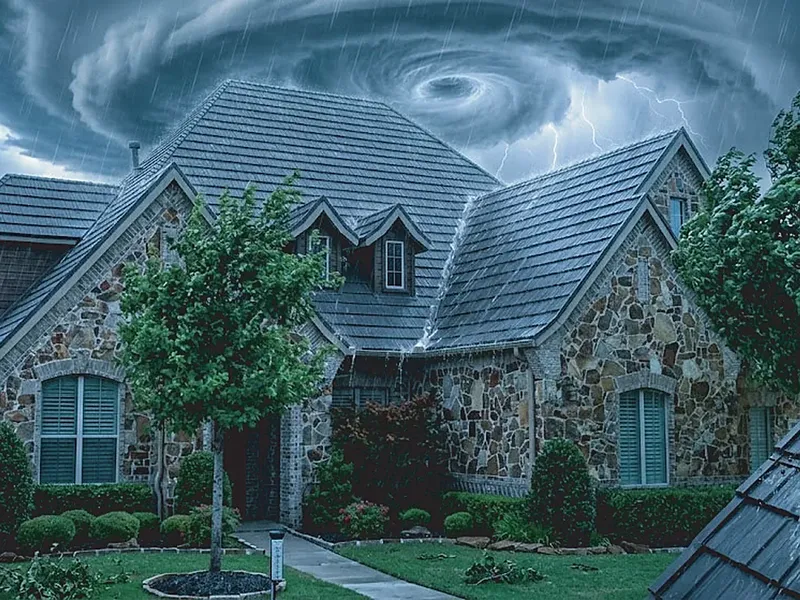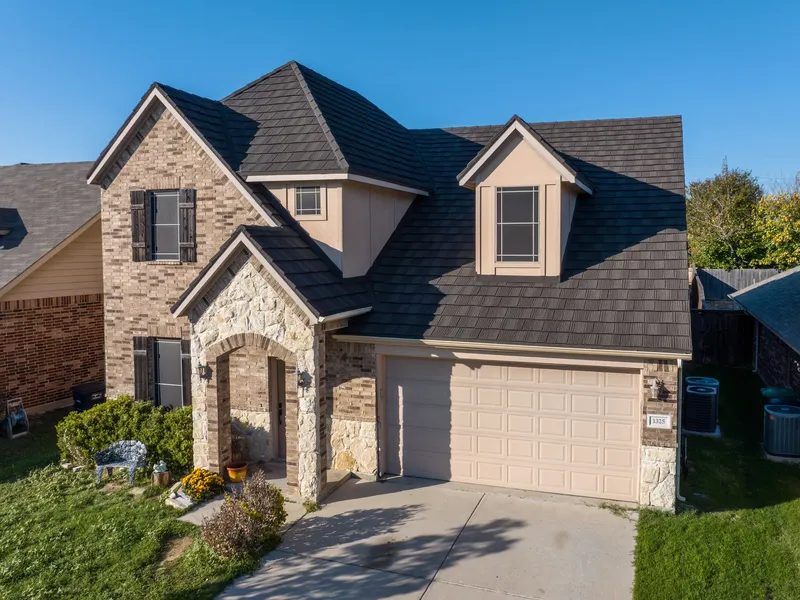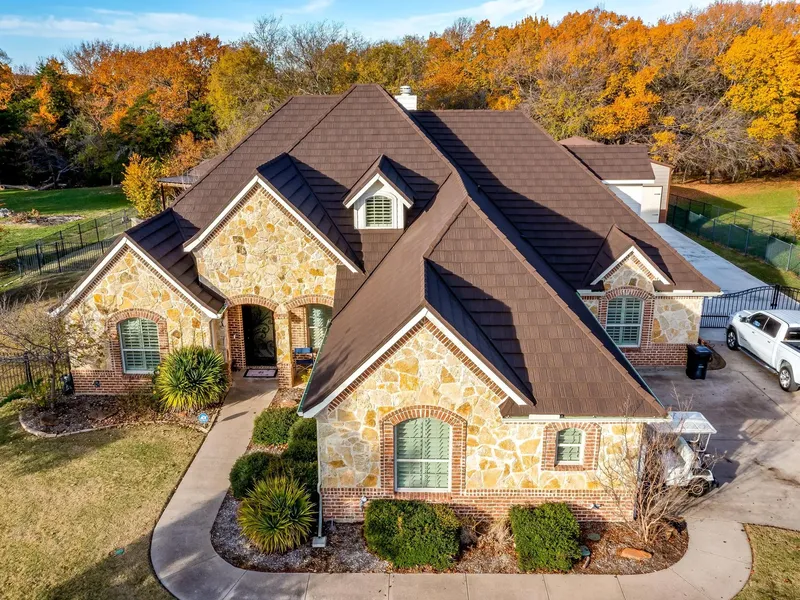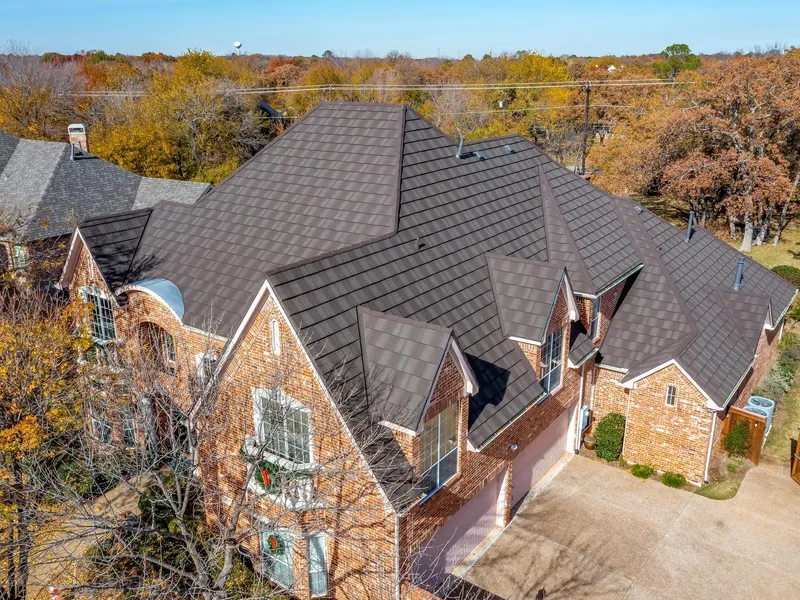
Stone-coated steel and asphalt shingles can look similar from the street, but they are different roofing systems. Asphalt shingles are usually less expensive to install. Stone-coated steel generally costs more at first and is designed for a longer service life, with the added strength of a metal panel. For homeowners thinking about storm exposure and the cost of future replacements, that difference matters.
At TEK Industries, we manufacture stone-coated steel roofing with the look of traditional shingle, shake, and tile. We believe homeowners should understand where each material has an advantage before choosing. The right answer depends on your roof, budget, climate, and how long you plan to own the house.
How the two roofing materials are made
An asphalt shingle typically starts with a fiberglass mat coated in asphalt and finished with mineral granules. Shingles are laid in overlapping rows and attached to the roof deck according to the manufacturer’s instructions. They remain a common choice because they are familiar, widely available, and offered in many styles and price ranges.
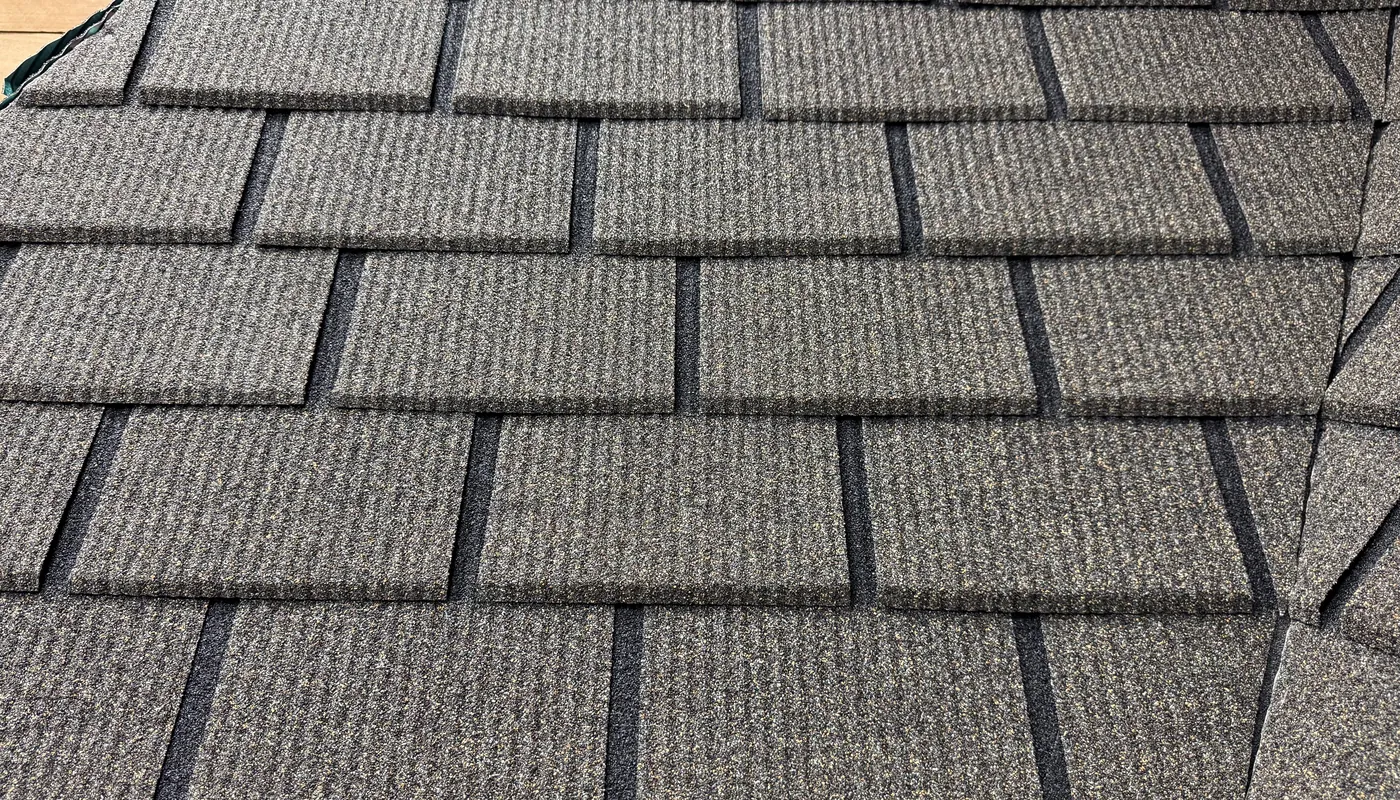
Stone-coated steel roofing starts with formed steel panels. Protective layers help reduce exposure of the metal, and a stone-granule finish creates a textured look. The panels are installed with connections and fasteners designed for that product. In a TEK roof, the core is 28-gauge steel, while the visible profile can resemble a shingle, shake, or tile roof.
Both systems rely on underlayment, flashing, roof-deck attachment, and proper installation. The outer material alone does not make a roof complete.
Upfront price: asphalt usually wins
If the primary goal is to replace an aging roof at the lowest reasonable upfront cost, asphalt shingles often have the advantage. A homeowner can select a good-quality asphalt product and work within a more modest installation budget.
Stone-coated steel has a higher material and installation cost in many markets. The exact difference changes with the home’s size, pitch, roof details, tear-off needs, location, and selected profile. Compare detailed written estimates rather than broad national price averages. A proposal that leaves out decking repairs, flashing, or required accessories is not truly comparable to one that includes them.
Lifespan: long-term owners should do the math
Asphalt shingles are commonly replaced sooner than a high-quality metal roof, though premium asphalt products and favorable conditions may extend their life. Stone-coated steel systems are often selected with a service-life goal of 50 years or more.
A longer-lasting roof may help avoid one or more full replacements during a long period of homeownership. But roof life is not guaranteed. Heavy weather, installation problems, poor drainage, and neglected maintenance can shorten the service life of any material.
A good comparison accounts for all expected roof expenses over the period you plan to own the home, including repairs and possible future replacements. If you expect to move in a few years, the upfront cost may matter more than long-term ownership value.
Hail resistance: compare actual ratings
Hail performance varies within each material category. Some asphalt shingles are rated Class 4 under UL 2218, the highest level of that laboratory impact test. Certain TEK stone-coated steel systems also carry Class 4 impact ratings.
A Class 4 designation means a tested product met specified criteria after impacts from a 2-inch steel ball dropped 20 feet. It does not mean the roof is hail-proof, that cosmetic damage cannot occur, or that every insurer will treat the damage the same way.
For either material, request the rating for the exact product on the estimate. Ask how the insurer handles cosmetic damage and whether the material qualifies for any premium discount.
Wind resistance: installation is critical
High winds try to lift roofing at exposed edges, ridges, and corners. Both premium shingles and metal roofing can be engineered for demanding wind conditions. The result depends on the roof’s location, product approval, roof shape, attachment system, and installation details.
TEK makes stone-coated steel roofing for severe-weather regions, including Hurricane® products. For applicable HURRICANE® Metal Shake and Metal Shake Pro products, our published limited materials warranty addresses defined panel uplift at wind velocities up to 140 mph, subject to its terms. That does not establish a universal rating for every roofing profile or guarantee the whole building against hurricane damage.
Ask your contractor to show the approved installation details and explain the roof deck, underlayment, edges, and flashing. Those details matter more than a slogan about a product’s wind speed.
What about appearance and HOA approval?
Many homeowners like asphalt because it looks familiar on almost any residential style. It is easy to find different colors and shingle shapes. Stone-coated steel offers another option for people who want a traditional appearance with a steel core.
Our TEK Metal Shingle, Metal Shake, and Metal Tile profiles are designed to complement different homes. A textured finish can blend into neighborhoods where exposed-seam metal might look too modern. Still, no manufacturer can guarantee HOA approval; check your community’s written rules and approval process before installation.
Which roof needs more maintenance?
Both materials benefit from routine inspections. Asphalt shingles may show granule loss, curling, lifted tabs, or cracking over time. Stone-coated steel can need attention at flashing, fasteners, penetrations, or areas affected by storms and debris. Severe impacts can damage either material, even when it remains watertight.
Neither roof should be ignored after a serious wind or hail event. Use a qualified professional to evaluate potential damage. Keep gutters and drainage paths clear and follow the manufacturer’s cleaning and maintenance instructions.
Sound, temperature, and comfort
It is easy to assume that metal roofing is always louder in the rain, but sound depends on the complete roof assembly. The deck, underlayment, attic insulation, roof profile, and accessories all affect what you hear inside. TEK incorporates foam features in certain roofing profiles, which can help address sound and insulation at the panel level.
Energy performance is also more complicated than the word “metal.” Roof color, surface properties, ventilation, insulation, and climate influence cooling and heating needs. Ask for product-specific information rather than an unverified promise about energy savings.
Repairs after a storm
A small area of damaged asphalt shingles may be repairable when the surrounding roof remains sound and matching materials are available. Similarly, damaged stone-coated steel sections may be repairable depending on the profile, connection design, and the location of damage. Matching color and finish can become more difficult as any roof ages.
When damage is widespread, roof decking or flashing has failed, or repeated repairs no longer solve the problem, a full replacement may make more sense. The decision should follow a documented inspection, not the roofing material alone.
Compare these five points before choosing
- Budget: Get complete written quotes for both systems, including removal and roof accessories.
- Time horizon: Estimate how many years you plan to own the house and potential replacement costs.
- Storm exposure: Review product-specific wind and impact documents for your address.
- Appearance: Compare real roof photos, finish samples, and any HOA requirements.
- Warranty and service: Read the written manufacturer terms and the installer’s workmanship coverage.
These questions make the comparison more useful than any single price, lifespan claim, or rating.